Mini Split Installation: Questions Before You Order
Mini split installation: how to choose a reliable installer, the questions to ask before you order, what a proper install includes (load calculation, pressure check, vacuum, commissioning) and what to get in writing.


Before a mini split installation, ask the contractor four things: how they will size it (a Manual J load calculation, not a rule of thumb), who does the refrigerant work (an EPA Section 608 certified technician) and the electrical work (a licensed electrician), how they will check the refrigerant circuit (nitrogen pressure check and a vacuum held below 500 microns, as PNNL describes), and what the written, itemized quote includes. A good installer answers all four without hesitating.
Affiliate disclosureAs an Amazon Associate we earn from qualifying purchases made through links on this page. Commissions never change our ratings.
How to choose a reliable installer
ENERGY STAR’s hiring checklist is a good filter. Find out the license and insurance requirements for contractors in your state, ask friends and neighbors for referrals, and call references about whether the job finished on time and on budget. Expect a home evaluation: a contractor who quotes a size over the phone without looking at your rooms is guessing. ENERGY STAR also points to the ACCA Quality Assured contractor list for installers who follow its quality-installation standard.
Then compare written, itemized estimates on cost, efficiency and warranty, and sign a proposal that lists the model numbers, the schedule and the warranty terms before work starts.
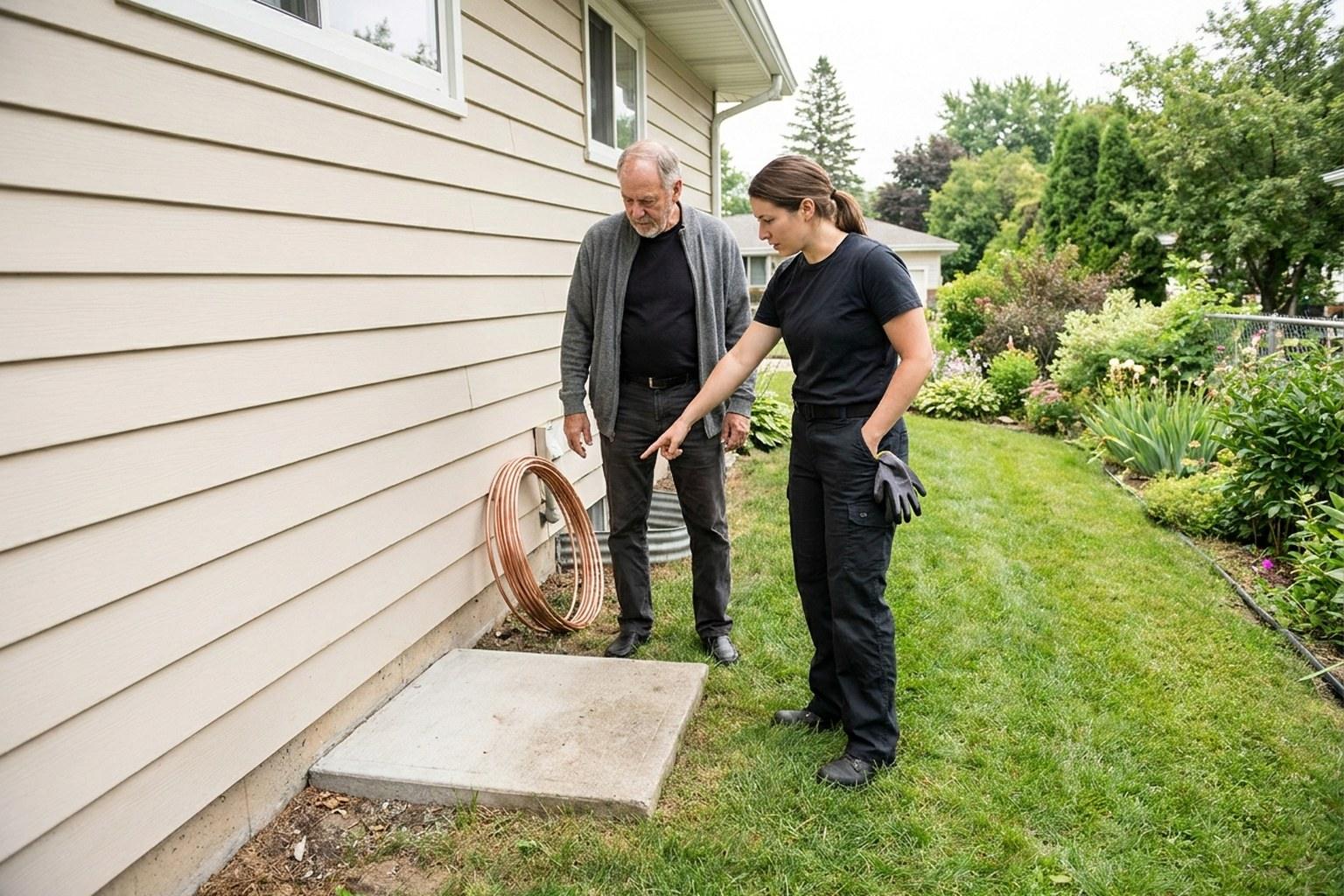
Questions about the design
- How did you size it? ENERGY STAR says the contractor should use Manual J; PNNL adds a calculation per zone and equipment selection with Manual S.
- Where will each head go, and why there? Placement decides comfort and drainage; see placement and noise.
- How long are the line runs? They must stay within the manual’s limits; DOE notes the outdoor unit can sit up to 50 ft from the indoor unit on many models.
- Where does the condensate go? By gravity outdoors, to a drain, or with a pump.
- Will you install equipment I buy myself? Ask before you order, and ask how it changes the labor warranty.
Questions about the refrigerant work
On a conventional system the refrigerant circuit is connected on site, and EPA requires technicians who service equipment that could release refrigerant to be Section 608 certified (Type II covers high-pressure appliances such as split systems). PNNL describes what a careful technician does: tighten flare nuts with a torque wrench to the manufacturer’s spec, pressure-check the system with nitrogen, then pull a vacuum and hold it, typically to 300 microns or lower and staying below 500 microns, before opening the valves. Ask whether they do each step and whether they record the readings.
Questions about electrical work and permits
Manufacturer manuals for DIY-marketed systems still say the wiring must comply with local and national codes and be done by a licensed electrician, on an individual branch circuit with a disconnect. Ask whether electrical work is in the quote or a separate electrician’s job, and who applies for any permit and inspection your jurisdiction requires. Our electrical requirements guide explains what the electrician will look at.
What commissioning should include
| Step | Why it matters | Source |
|---|---|---|
| Nitrogen pressure check | Finds leaks before refrigerant is released into the lines | PNNL |
| Vacuum held below 500 microns | Confirms no leaks, air or moisture remain | PNNL |
| Refrigerant charge per manufacturer | Too much or too little cuts efficiency and shortens life | PNNL, ENERGY STAR |
| Condensate check | Water must drain without traps or leaks | PNNL |
| Run in every mode | Cooling, heating, fan and dry all work | PNNL |
| Owner walkthrough | Filters, remote, error codes, who to call | ENERGY STAR |
Get it in writing
- Exact indoor and outdoor model numbers, and the AHRI reference for the matched pair.
- Line length, covers, wall penetrations and patching.
- Electrical scope, disconnect, permit and inspection.
- Commissioning readings and warranty registration.
- Who answers the phone in the first years, and what a service call costs.
What each of those items does to the price is in our mini split cost guide. When something goes wrong later, our mini split repair guide lists the checks to do before that call.
Check that the pieces are a matched system
Every indoor unit must be a verified match for the outdoor unit, which PNNL says to confirm in the AHRI directory, and that applies to mixed systems with ducted air handlers and wall heads on one condenser. Ask the contractor for the AHRI reference of the exact combination being quoted; it also documents the rated SEER2 and HSPF2 you are paying for.
Bring the right system to the conversation
Pick the system before the visit, so the quote is for real equipment. Multi-zone jobs benefit most from that preparation, because the installer has to plan each head and line route. From our rankings:
- ROVSUN 3-Zone 28,000 BTU (9K/9K/9K): three 9,000 BTU heads with 25 ft line sets and a pre-charged condenser per the listing; rated 9.1/10.
- Senville Tri Zone 28,000 BTU: 28,000 BTU tri-zone with three air handlers per the listing.
- Mountman 12,000 BTU 110/120V: a single-zone 12,000 BTU, 110/120V option for one room.
All ratings: best multi-zone mini splits and best 12,000 BTU mini splits.
Frequently asked questions
How do homeowners choose a reliable mini split installation company?
Check your state’s license and insurance rules, ask for referrals and call references, insist on a home evaluation, and compare written, itemized bids with model numbers and warranties, as ENERGY STAR recommends. ACCA’s Quality Assured list is another starting point.
Will an HVAC contractor install a mini split I bought online?
Some will and some won’t, and some limit the labor warranty. Ask before you order and give them the exact indoor and outdoor model numbers.
Do I need a permit to install a mini split?
Often, because the job includes electrical and refrigerant work, but it depends on your jurisdiction. Ask the installer which permits apply and whether the quote includes them.
What should a mini split installation include?
A load calculation, mounting, line set and drain, electrical supply with a disconnect, a nitrogen pressure check and vacuum, the correct refrigerant charge, and a run in every mode.
Our rated picks
The three best-rated models of our best multi-zone mini splits in 2026 ranking, from the buyer review record and the listed specs.


Product images: Amazon listings
Sources
- ENERGY STAR (U.S. EPA) — 10 Tips for Hiring a Heating and Cooling Contractor (consulted Nov 2026)
- ENERGY STAR (U.S. EPA) — HVAC Quality Installation (consulted Nov 2026)
- ENERGY STAR (U.S. EPA) — Ductless Heating & Cooling (consulted Nov 2026)
- Pacific Northwest National Laboratory, Building America Solution Center — Ductless (Mini-Split) Heat Pumps (consulted Nov 2026)
- U.S. EPA — Section 608 Technician Certification Requirements (consulted Nov 2026)
- MRCOOL (copy hosted by InspectAPedia) — DIY Multi-Zone 4th Gen Installation & Owner’s Manual (PDF, version 06-06-2023) (consulted Nov 2026)
- U.S. Department of Energy, Energy Saver (archived June 18, 2026) — Ductless Minisplit Heat Pumps (consulted Nov 2026)