Mini Split Maintenance: An Owner Planning Checklist
Mini split maintenance checklist: clean filters about every two weeks, keep the outdoor coil and drain clear, book an annual pre-season check-up, and know when the coil and blower need a professional clean.

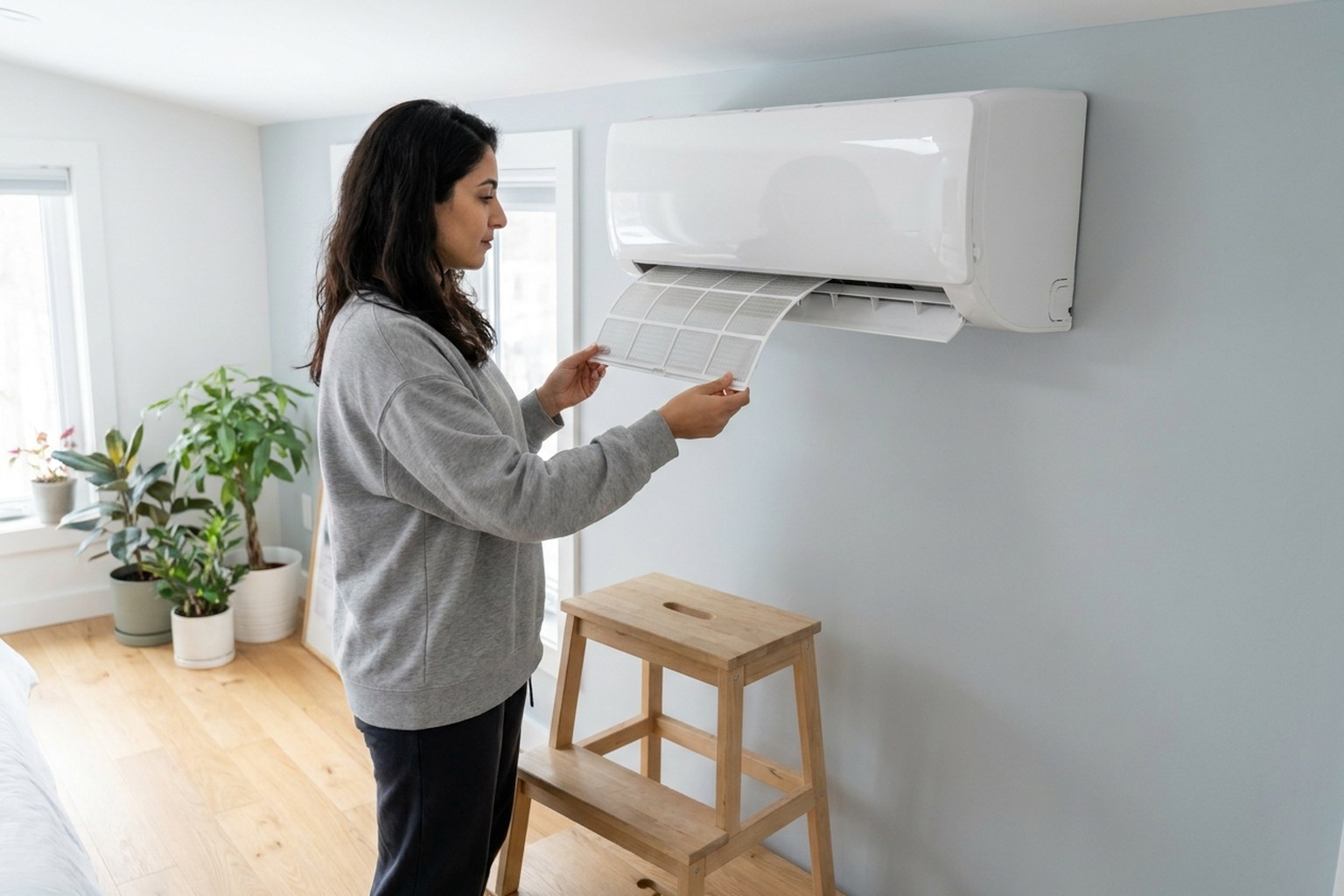
Mini split maintenance comes down to a short owner routine and a yearly professional visit. Clean the washable filters about every two weeks in heavy use, as PNNL notes for many models, keep the outdoor unit and the condensate drain clear, and book an annual pre-season check-up as ENERGY STAR recommends: cooling in spring, heating in fall. Coil and blower-wheel cleaning and anything involving refrigerant stay with a technician.
Affiliate disclosureAs an Amazon Associate we earn from qualifying purchases made through links on this page. Commissions never change our ratings.
The owner checklist
| Task | How often | Why |
|---|---|---|
| Wash or vacuum the mesh filters, dry fully | About every 2 weeks in use (PNNL); monthly at minimum (ENERGY STAR) | Dirty filters raise energy use and can damage equipment |
| Clear leaves, snow and clutter around the outdoor unit | Monthly, and after storms | Blocked coils run longer and heat or cool less |
| Check the drain outlet and any condensate pump | Start of the cooling season | A plugged drain causes water damage |
| Look for ice, water marks or new noises | When you clean the filters | Early signs of airflow or refrigerant problems |
| Note error codes with date and mode | Whenever one appears | Shortens the service visit |

Why mini split filters need more attention
PNNL explains that many ductless systems use washable mesh filters with very low capture of fine particles. They keep airflow high for the small indoor fans, but more dust reaches the coil and the blower wheel. Wall-mounted units also tend to collect moisture on the blower wheel in cooling mode, so dust sticks and fungal growth can follow. Add-on filters often cover only part of the mesh area, so most air bypasses them. Clean filters are the single cheapest maintenance step.
The annual professional check-up
ENERGY STAR recommends a pre-season check-up every year, in spring for cooling and in fall for heating, because contractors get busy once the season starts. A typical visit includes:
- Tightening electrical connections and measuring voltage and current on motors.
- Checking and clearing the condensate drain.
- Cleaning the indoor and outdoor coils; dirty coils make the system run longer.
- Checking the refrigerant charge and adjusting it if needed.
- Cleaning and adjusting blower components; ENERGY STAR notes airflow problems can cut efficiency by up to 15%.
- Checking that controls start, run and shut off the system properly.
Deep cleaning the coil and blower wheel
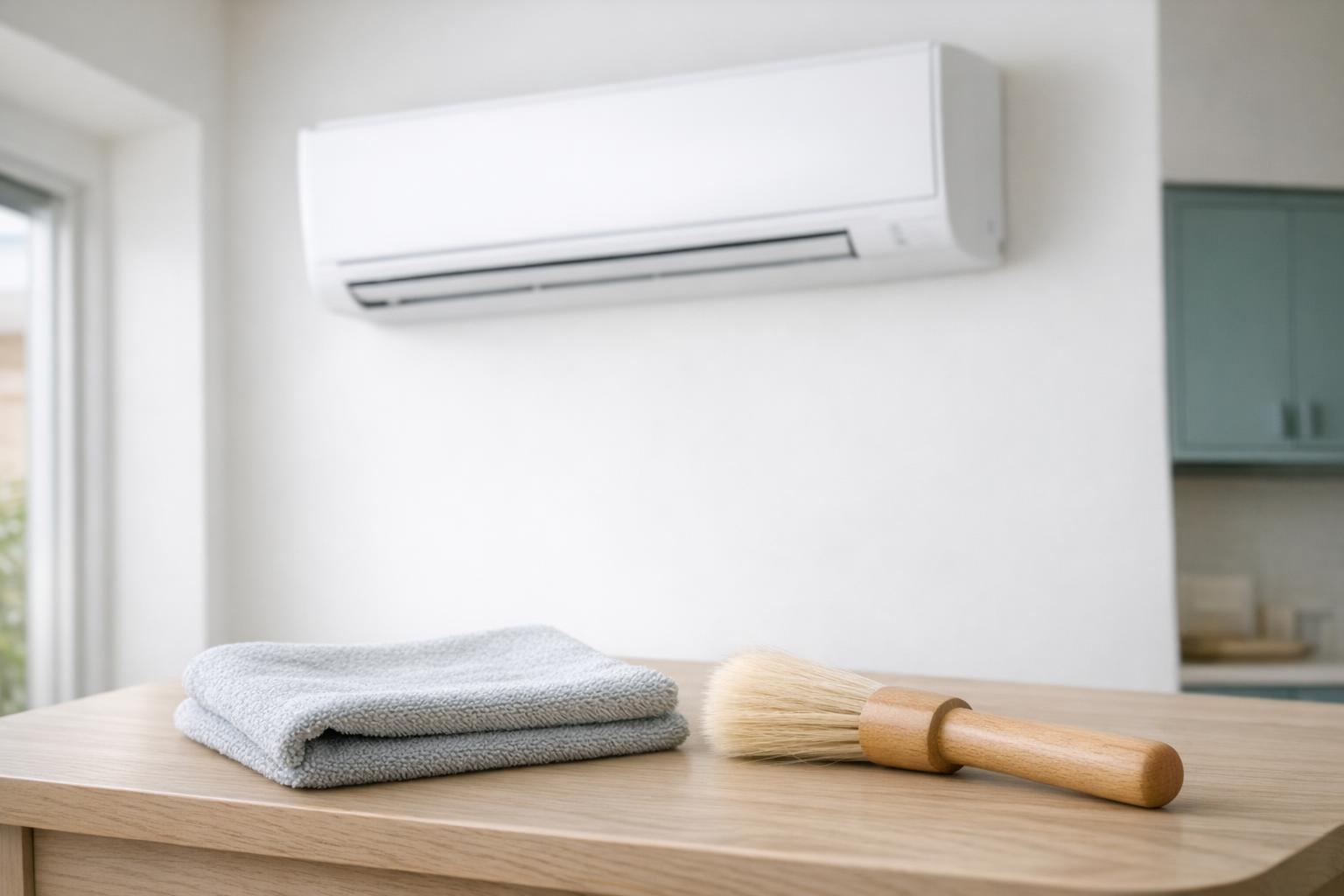
When the blower wheel and coil are coated, PNNL describes a professional clean: a technician bags the unit with a mini split bib, sprays a pressurized or foaming cleaner between the coil fins and scrubs the air path, vanes and condensate tray. That is not a spray-can job for an owner, because the electronics sit right next to the coil. If your unit smells musty after a filter clean, book it.
What never belongs on the owner list
Topping up refrigerant, opening the refrigerant circuit or chasing a leak is technician work: EPA requires Section 608 certification to service equipment that could release refrigerant, and refrigerant itself is sold only to certified technicians with limited exceptions. Electrical panels inside the units stay closed too. If something already looks wrong, our mini split repair and troubleshooting guide sorts each symptom into what you can check and what needs a tech.
Winter and off-season care
- Keep the outdoor unit above the snow line and clear after storms; PNNL recommends mounting it well above typical snow height.
- Expect short defrost cycles with steam; ice that never clears is a service call.
- Do not run a cover over an operating outdoor unit; if you cover it in the off-season, follow the manual.
How often to deep clean, and the signs it is time
PNNL recommends a deep clean of wall-hung heads every 1 to 3 years, depending on use and conditions: more often in humid climates and with heavy use, less often for a head used part-time in a dry climate. To check, shine a light into the air outlet and look at the blower wheel and the louvers. A layer of dust or dark spots means it is time. PNNL advises against shortcutting it with a can of foaming coil cleaner. If you add supplemental filters, remember PNNL’s caution that many cover only part of the airflow, so the standard mesh filters still need their regular cleaning.
Maintenance and the systems we rate
Filter access and a filter reminder make the routine easier. The Mountman 12,000 BTU 110/120V listing mentions a 26 dB sleep mode and installation kit; the ROVSUN 12,000 BTU Wi-Fi 115V adds Wi-Fi, which helps you spot error codes from your phone. Whatever you buy, keep the manual and the commissioning sheet with your maintenance log. Rankings: best 12,000 BTU mini splits.
Frequently asked questions
How often should mini split filters be cleaned?
PNNL notes many standard washable filters should be cleaned about every two weeks in use; ENERGY STAR’s general advice is to inspect filters monthly. Follow your manual if it is stricter.
Does a mini split need annual maintenance?
ENERGY STAR recommends a pre-season professional check-up every year, in spring for cooling and in fall for heating.
Can I clean my mini split coil myself?
You can vacuum or wash the filters and wipe the front. A deep clean of the coil and blower wheel needs a bib, a foaming cleaner and care around the electronics, so PNNL describes it as a technician job.
What does mini split maintenance include?
Filters and clearances for the owner; for the technician, electrical connections, the condensate drain, coil cleaning, the refrigerant charge, blower components and a controls check.
Our rated picks
The three best-rated models of our best mini splits in 2026 ranking, from the buyer review record and the listed specs.


Product images: Amazon listings
Sources
- Pacific Northwest National Laboratory, Building America Solution Center — Ductless (Mini-Split) Heat Pumps (consulted Nov 2026)
- ENERGY STAR (U.S. EPA) — Maintenance Checklist (consulted Nov 2026)
- U.S. EPA — Section 608 Technician Certification Requirements (consulted Nov 2026)
- U.S. EPA — Refrigerant Sales Restriction (consulted Nov 2026)