How to Choose a Mini Split for Your Home
How to choose a mini split: size it from a load calculation, pick 115V or 230V, read SEER2 and HSPF2 against the DOE and ENERGY STAR floors, and line up an installer first.


To choose a mini split, settle four things in this order: the capacity your room actually needs (a Manual J load calculation, or the ENERGY STAR chart as a first estimate), the voltage your panel can supply (115V units top out around 12,000 BTU), the efficiency you want above the federal floor of 14.3 SEER2 and 7.5 HSPF2, and the installer who will connect and commission it. Get those right and the brand choice becomes the easy part.
Affiliate disclosureAs an Amazon Associate we earn from qualifying purchases made through links on this page. Commissions never change our ratings.
Write down the job before you shop
List the rooms, when they are used and whether the mini split will heat, cool or both. A bedroom used at night, a home office used all day and a garage workshop are three different jobs. Decide too whether the system supplements a working furnace or becomes your main heat. ENERGY STAR describes both uses: mini splits can heat and cool a whole home, but they are also a common fit for homes with costly electric baseboard heat, additions, rooms over a garage and hot or cold spots.
That one decision changes the rest. A supplemental head in a sunny office can be chosen mostly on cooling. A system that has to carry a house through January needs cold-climate heating data, which we cover in mini split cold-weather performance.
Size it from the room, not the box
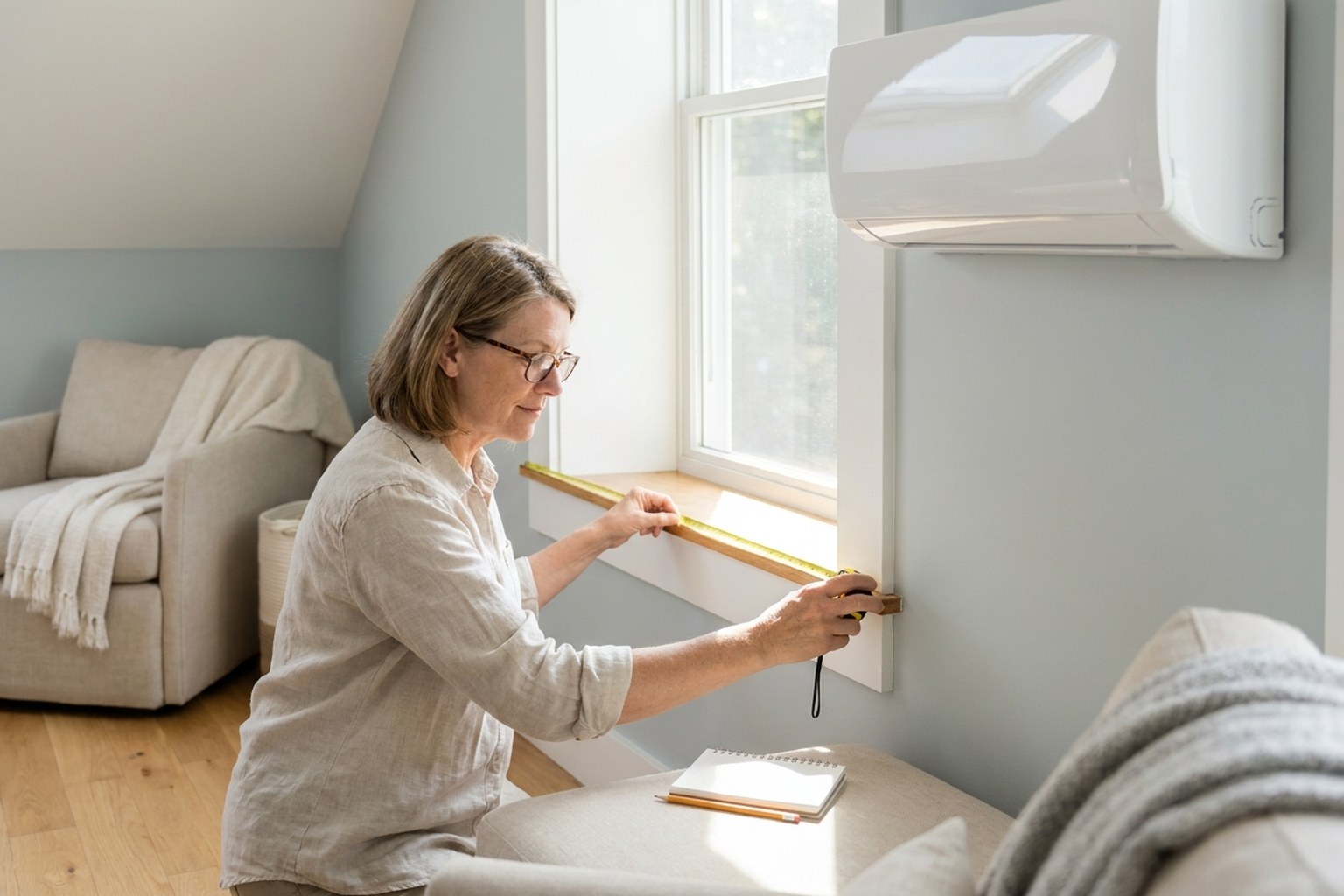
ENERGY STAR says your contractor should size the system with a Manual J calculation, and its quality-installation page warns against relying on a rule of thumb. For a first estimate, the ENERGY STAR room air conditioner chart is a useful sanity check: about 12,000 BTU per hour for 450 to 550 sq ft and 18,000 BTU for 700 to 1,000 sq ft, assuming 8 ft ceilings, then 10% less for a heavily shaded room and 10% more for a very sunny one.
Compare that with listing claims. The Mountman 12,000 BTU 110/120V listing says it cools up to 750 sq ft at 12,000 BTU, well past the chart. Such claims assume ideal rooms. Oversizing is a real problem, not a safety margin: PNNL notes that an oversized head short-cycles, wastes energy and controls humidity poorly. Our mini split sizing guide walks through the numbers and our BTU and tons converter converts units.
115V or 230V: check the panel first
Voltage decides more than people expect. PNNL notes that single-zone 115/120V ductless units exist from 6,000 to 12,000 BTU per hour and can go on a lightly loaded 15A or 20A circuit. Bigger systems need a 208/230V circuit: every 18,000 BTU model in our ranking is 208-230V according to its listing. Manufacturers still ask for an individual circuit; the MRCOOL manual says not to share it with other appliances. Read mini split electrical requirements before you pick a voltage.
Efficiency: what the SEER2 and HSPF2 numbers should be
| Level | Cooling | Heating | Source |
|---|---|---|---|
| Federal minimum (split heat pump, since 2023) | 14.3 SEER2 | 7.5 HSPF2 | DOE |
| ENERGY STAR certified (split heat pump) | 15.2 SEER2 or more | 7.8 HSPF2 or more | ENERGY STAR |
| ENERGY STAR Cold Climate (non-ducted) | 15.2 SEER2 or more | 8.5 HSPF2 or more | ENERGY STAR |
| Range DOE cites for ductless mini splits | 15.2 to 35 SEER2 | DOE Energy Saver |
Most budget systems on the store sit in the high teens to low twenties: the Rellytech 12,000 BTU 19 SEER2 115V listing states 19 SEER2, the ROVSUN 12,000 BTU Wi-Fi 115V 20 SEER2. Treat a seller-stated rating as a claim until you see it for the exact indoor and outdoor pair; the ratings explainer is SEER2 and HSPF2 explained.
Line up the installer before you click buy
Refrigerant work on a conventional system is not a homeowner job: EPA rules require technicians who service equipment that can release refrigerant to be Section 608 certified, and PNNL adds that charging must be done by an EPA-certified technician. Ask before you order whether the contractor will install equipment you bought yourself, and on what warranty terms. ENERGY STAR's hiring advice is practical: check license and insurance requirements in your state, call references, expect the contractor to look at your house before quoting, and get written, itemized estimates with model numbers and warranty terms.
Pre-charged DIY kits change the refrigerant step, not the wiring or the mounting. Our guide can you install a mini split yourself sets out what stays with a pro, and questions to ask before installation lists what to get in writing.
Which of our rated mini splits fits which case
| Your case | Start with | Why |
|---|---|---|
| One room up to roughly 550 sq ft, 115V circuit | Mountman 12,000 BTU 110/120V | 12,000 BTU, 19 SEER2 and 110/120V per the listing; rated 9.2/10 |
| Same room, Wi-Fi control wanted | ROVSUN 12,000 BTU Wi-Fi 115V | 20 SEER2, 115V, 28 dB mute mode per the listing |
| Larger open room, 230V available | Rellytech 18,000 BTU 208-230V | 18,000 BTU, 19 SEER2, 208-230V per the listing |
| Three bedrooms on one outdoor unit | ROVSUN 3-Zone 28,000 BTU (9K/9K/9K) | three 9,000 BTU heads, 20 SEER2, 25 ft line sets per the listing |
The full lists with ratings and current prices: best 12,000 BTU mini splits, best 18,000 BTU mini splits and best multi-zone mini splits.
Frequently asked questions
How do homeowners choose a reliable mini split installation company?
Follow ENERGY STAR's hiring checklist: confirm your state's license and insurance rules, call references, expect a home evaluation instead of a phone quote, and compare written, itemized bids with model numbers and warranties. For refrigerant work the technician must hold EPA Section 608 certification.
What size mini split do I need?
Your contractor should run a Manual J load calculation. As a first estimate, the ENERGY STAR chart gives about 12,000 BTU for 450 to 550 sq ft and 18,000 BTU for 700 to 1,000 sq ft with 8 ft ceilings, adjusted for sun, shade and occupants.
Is a 115V mini split good enough?
For one room up to about 12,000 BTU, yes: PNNL notes 115/120V models from 6,000 to 12,000 BTU can run on a 15A or 20A circuit. The larger systems in our rankings are 208/230V, and manufacturers still ask for an individual circuit.
What SEER2 rating should a mini split have?
At least the federal 14.3 SEER2 and 7.5 HSPF2 for a split heat pump. ENERGY STAR certification starts at 15.2 SEER2 and 7.8 HSPF2, and the cold-climate label for ductless units at 8.5 HSPF2.
Our rated picks
The three best-rated models of our best mini splits in 2026 ranking, from the buyer review record and the listed specs.


Product images: Amazon listings
Sources
- ENERGY STAR (U.S. EPA) — Ductless Heating & Cooling (consulted Nov 2026)
- ENERGY STAR (U.S. EPA) — Room Air Conditioners: sizing chart (consulted Nov 2026)
- ENERGY STAR (U.S. EPA) — HVAC Quality Installation (consulted Nov 2026)
- Pacific Northwest National Laboratory, Building America Solution Center — Ductless (Mini-Split) Heat Pumps (consulted Nov 2026)
- U.S. Department of Energy — 2023 Central Air Conditioner Standards FAQ (PDF) (consulted Nov 2026)
- ENERGY STAR (U.S. EPA) — Heat Pump Equipment Key Product Criteria (consulted Nov 2026)
- U.S. Department of Energy, Energy Saver (archived June 18, 2026) — Ductless Minisplit Heat Pumps (consulted Nov 2026)
- ENERGY STAR (U.S. EPA) — 10 Tips for Hiring a Heating and Cooling Contractor (consulted Nov 2026)
- U.S. EPA — Section 608 Technician Certification Requirements (consulted Nov 2026)