Can You Install a Mini Split Yourself? Rules and Limits
Can you install a mini split yourself? What EPA refrigerant rules allow, what pre-charged DIY kits change, why the wiring stays with a licensed electrician, and how warranties treat DIY installs.


You can install some mini splits yourself, within limits. A homeowner may mount a pre-charged DIY system and connect its sealed Quick Connect lines where the manufacturer allows it, but on a conventional system the refrigerant work requires an EPA Section 608 certified technician, and in both cases the manuals say the wiring must be done by a licensed electrician. Check the manual and warranty of your exact model before you buy, because they decide what “DIY” covers.
Affiliate disclosureAs an Amazon Associate we earn from qualifying purchases made through links on this page. Commissions never change our ratings.
What the federal refrigerant rules cover
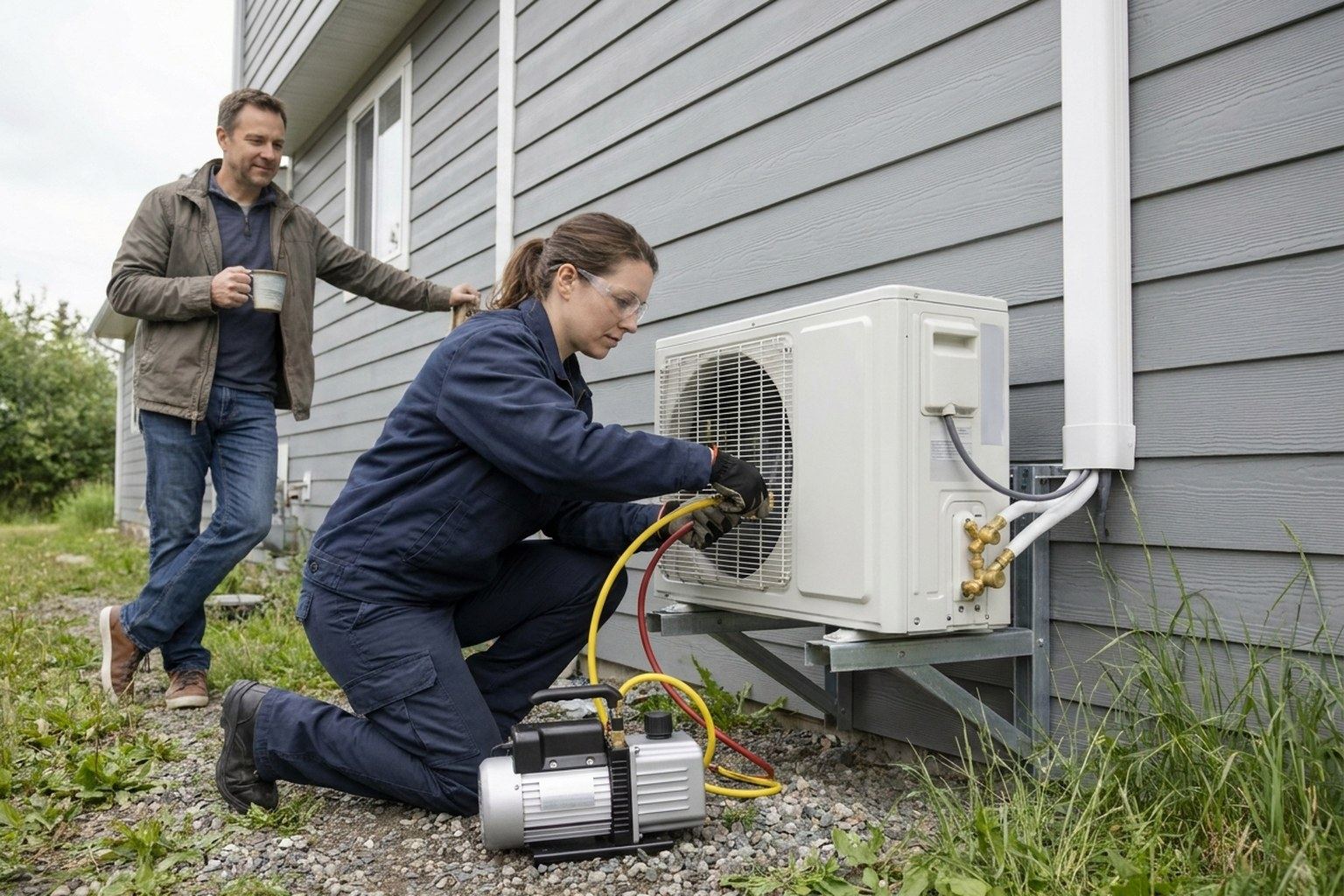
EPA requires technicians who maintain, service, repair or dispose of equipment that could release refrigerant into the atmosphere to be certified under Section 608; Type II covers high-pressure appliances such as split systems. EPA also restricts the sale of refrigerant to certified technicians, with limited exceptions, and prohibits knowingly venting refrigerant during service or disposal. In practice that means a homeowner cannot flare, evacuate and charge a conventional system’s lines, or buy refrigerant to top one up.
What a pre-charged DIY kit changes
DIY systems such as MRCOOL’s ship with refrigerant already in the outdoor unit and in sealed line sets with Quick Connect couplings, so there is no vacuum pump or charging step. That is why they can be marketed to homeowners. It does not remove the other jobs: mounting the bracket on studs, drilling a downward-sloping wall hole (3.5 inches in MRCOOL’s guide), routing the drain, setting the outdoor unit on a pad or bracket with its clearances, and leak-checking the couplings with soapy water.
| Step | Conventional split | Pre-charged DIY kit |
|---|---|---|
| Refrigerant lines | Cut, flared and torqued on site | Sealed Quick Connect lines in fixed lengths |
| Pressure check and vacuum | Nitrogen pressure check, vacuum below 500 microns (PNNL) | Not needed; soapy-water leak check |
| Who connects the refrigerant side | EPA 608 certified technician | Homeowner, if the manual allows it |
| Electrical supply and disconnect | Licensed electrician | Licensed electrician |
| Line length changes | Cut to length | Only with the maker’s extension kits |
The wiring stays with a licensed electrician
Even DIY manuals draw this line. MRCOOL’s quick-start guide says a certified electrician must supply power from a disconnect, and its full manual says the wiring must comply with local and national codes and be installed by a licensed electrician on an individual branch circuit. Daikin’s manual for its conventional systems asks for a dedicated circuit and an earth leakage breaker. Our electrical requirements guide covers 115V versus 230V and the nameplate data the electrician needs.
Warranty, permits and sizing risk
- Warranty: MRCOOL warns that disconnecting and reconnecting Quick Connect couplings can cause leaks and voids the warranty. Read the warranty terms for DIY installs of your model before ordering.
- Permits: electrical and mechanical permits depend on your jurisdiction; ask the building department before you start.
- Sizing: nobody runs a Manual J for you on a DIY job. Use ENERGY STAR’s chart as a first estimate and our sizing guide; an oversized unit short-cycles, as PNNL notes.
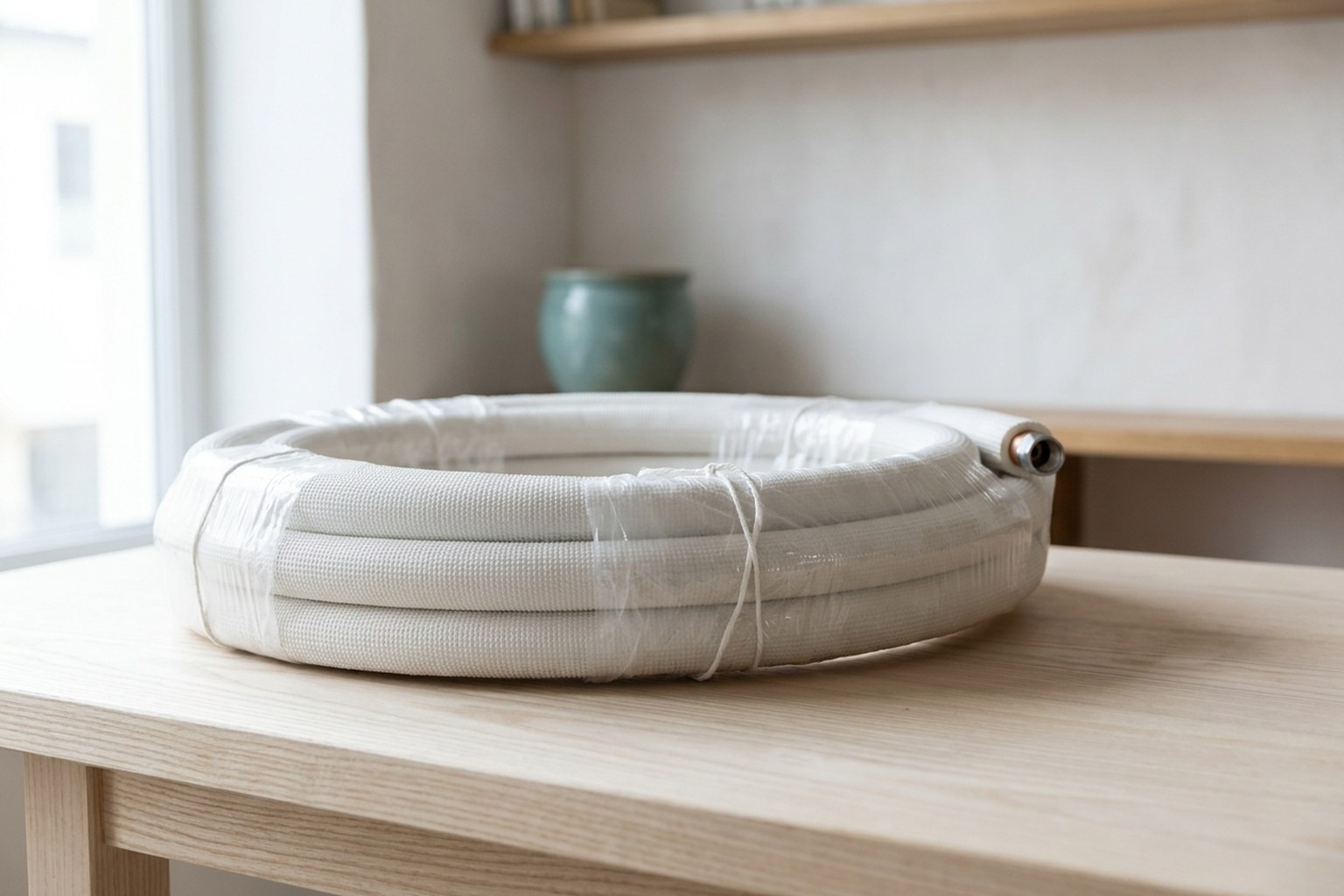
- Line length: pre-charged lines come in fixed lengths; measure the route before you choose the kit.
A sensible split of the work
Many homeowners do the planning, buying and mounting, and hire out the rest: an electrician for the circuit and disconnect, and on a conventional system a certified technician for the refrigerant circuit and commissioning. Agree on that before you order, and ask whether the contractor will install equipment you bought. ENERGY STAR’s hiring checklist and our installation questions help with that conversation.
What a DIY install day actually involves
- Indoor bracket: fixed to studs with the manual’s template; MRCOOL’s template marks 16 inch stud spacing.
- Wall hole: 3.5 inches in MRCOOL’s quick-start guide, drilled slightly downhill to the outside so condensate drains.
- Outdoor unit: on a pad or bracket with the clearances in the manual (MRCOOL: 24 in above, 79 in in front, 12 in behind on the ground).
- Lines and drain: routed through the hole, drain at the bottom of the bundle, no kinks.
- Couplings: tightened as the manual specifies, then checked with soapy water for bubbles.
- Power: connected by the electrician from the disconnect, before the first start.
When DIY is the wrong choice
- The route is longer than the pre-charged lines and would need extension kits.
- The head would sit on an interior wall, with lines through an attic or crawlspace and a condensate pump.
- The system will be your main heat in a cold climate and needs a proper heating load calculation.
- Your jurisdiction requires a licensed contractor or a mechanical permit for the work.
- You are not comfortable working on a ladder at height or drilling through an exterior wall.
In those cases, get a quote for a professional install of a conventional system as well; it comes with a labor warranty and a load calculation. Our cost guide shows what goes into the price.
Systems in our rankings and how they install
| System | Install type | Notes |
|---|---|---|
| ROVSUN 3-Zone 28,000 BTU (9K/9K/9K) | Pre-charged condenser, 25 ft line sets | Three 9,000 BTU heads, 208-230V |
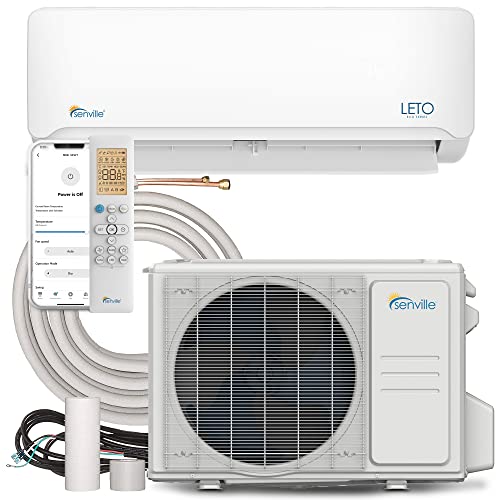
| Senville LETO 12,000 BTU | Conventional, 16 ft line set and kit | 12,000 BTU, rated 7.9/10 |
| Mountman 12,000 BTU 110/120V | Conventional, installation kit included | 12,000 BTU, 110/120V |
Compare ratings in our best 12,000 BTU mini splits and best multi-zone mini splits rankings, and check the parts list in line sets and accessories.
Frequently asked questions
Can I install a mini split myself?
A pre-charged DIY system, yes, within what its manual and warranty allow. A conventional system needs an EPA Section 608 certified technician for the refrigerant work, and the wiring belongs to a licensed electrician in both cases.
Is it legal to install your own mini split?
Mounting and connecting a sealed, pre-charged system is not refrigerant servicing in the EPA sense, but opening a refrigerant circuit, buying refrigerant or venting it is restricted to certified technicians. Electrical and permit rules depend on your jurisdiction.
Does a DIY mini split void the warranty?
It depends on the manufacturer. MRCOOL sells DIY systems for homeowners but warns that reconnecting Quick Connect couplings can cause leaks and voids the warranty. Read the warranty terms first.
Do I need a vacuum pump for a DIY mini split?
Not for a pre-charged Quick Connect system. A conventional system needs a nitrogen pressure check and a vacuum held below 500 microns, which is technician work.
Our rated picks
The three best-rated models of our best 18,000 BTU mini splits in 2026 ranking, from the buyer review record and the listed specs.


Product images: Amazon listings
Sources
- U.S. EPA — Section 608 Technician Certification Requirements (consulted Nov 2026)
- U.S. EPA — Refrigerant Sales Restriction (consulted Nov 2026)
- U.S. EPA — Stationary Refrigeration: Prohibition on Venting Refrigerants (consulted Nov 2026)
- MRCOOL — DIY Multi-Zone 3rd Gen quick-start installation guide (PDF) (consulted Nov 2026)
- MRCOOL (copy hosted by InspectAPedia) — DIY Multi-Zone 4th Gen Installation & Owner’s Manual (PDF, version 06-06-2023) (consulted Nov 2026)
- Daikin — Installation manual FTXC-C / RXC-C R32 split series (PDF) (consulted Nov 2026)
- Pacific Northwest National Laboratory, Building America Solution Center — Ductless (Mini-Split) Heat Pumps (consulted Nov 2026)
- ENERGY STAR (U.S. EPA) — 10 Tips for Hiring a Heating and Cooling Contractor (consulted Nov 2026)