Mini Split Cost to Install: What Drives the Price
Mini split cost to install: what each line item adds (heads, line runs, electrical, permits), why no public agency publishes a national price, the tax credit that ended in 2025, and how to compare quotes.


A mini split installation is priced as a sum of line items: the equipment pair, one set of labor and materials per indoor head, the line and drain route, the electrical circuit and disconnect, refrigerant work and permits. No federal agency publishes a national installed price, and DOE simply lists higher installation cost among the drawbacks of minisplits. To get a real number, ask two or three contractors for written, itemized quotes on the same model numbers and the same route.
Affiliate disclosureAs an Amazon Associate we earn from qualifying purchases made through links on this page. Commissions never change our ratings.
The line items that make up a quote
| Line item | What pushes it up | What keeps it down |
|---|---|---|
| Equipment pair | Higher capacity, multi-zone, cold-climate model | Correct size from a load calculation |
| Indoor heads | Each head adds mounting, a line set and a drain | Fewer, well-placed heads |
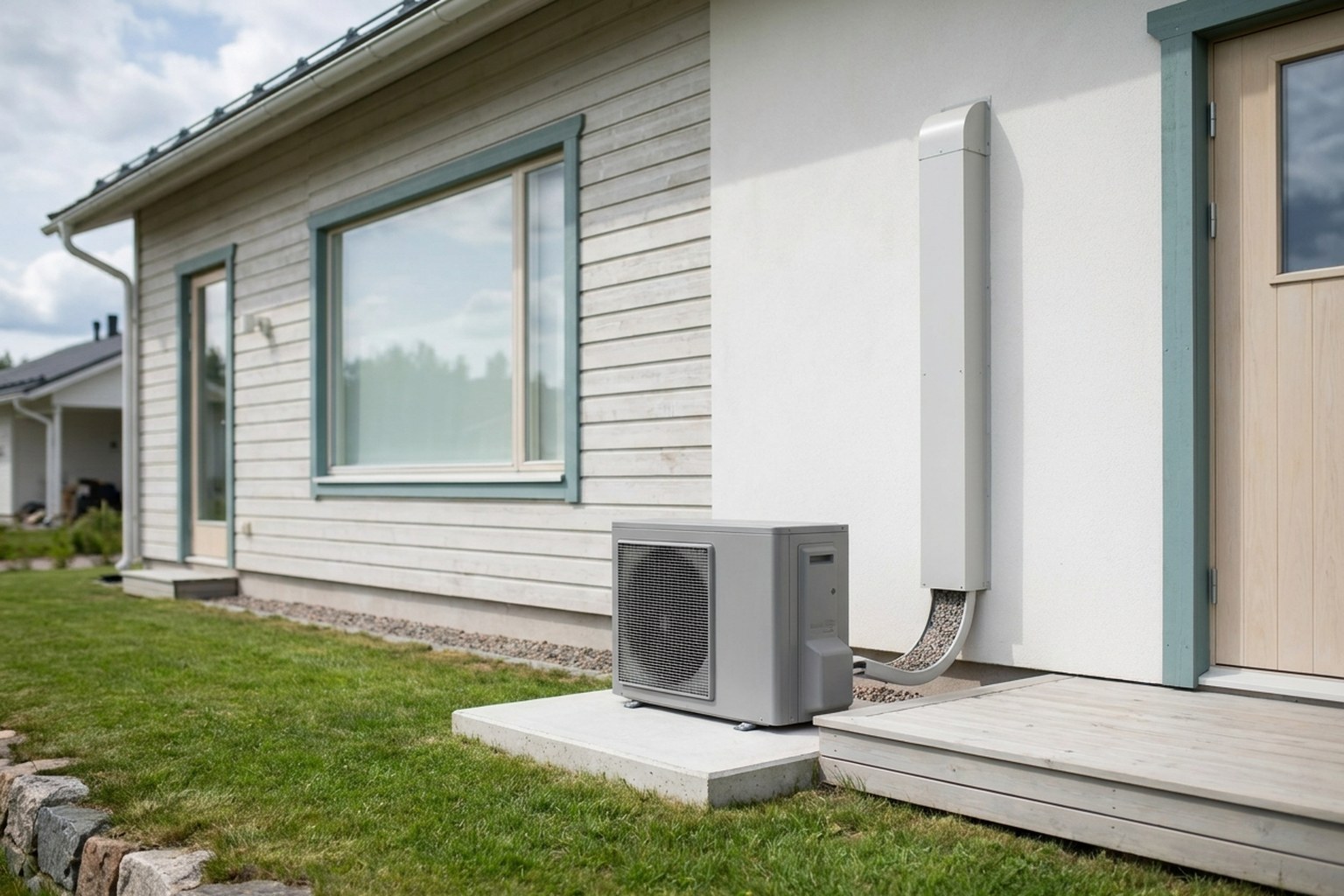
| Line and drain route | Long runs, attics, crawlspaces, covers, a condensate pump | Head on an exterior wall, unit right behind it |
| Electrical | New 230V circuit, panel upgrade, long cable run | Spare capacity, 115V unit on a free circuit |
| Refrigerant work | Extra charge for long lines, flaring and evacuation | Pre-charged lines within the standard length |
| Permits and inspection | Jurisdictions that require both | Included and quoted up front |
Why heads and zones change the total most
Every indoor head is its own small job: a bracket on studs, a wall penetration, a line set, a communication cable and a drain. A three-zone system therefore costs much more to install than a single zone of the same total capacity. PNNL also warns that even the smallest heads can be too big for small rooms, so a head in every room is not automatically the best value. Our single-zone vs multi-zone guide shows when two single-zone systems beat one multi-zone.
Electrical, refrigerant and permit items
The electrical scope is often the biggest unknown. PNNL lists assessing the home’s electrical system and making any upgrades as an early installation step; manufacturers ask for an individual circuit and a disconnect, and the wire and breaker follow the nameplate. On a conventional system, refrigerant work means an EPA-certified technician, a nitrogen pressure check and a vacuum; long lines can need extra charge, which Daikin specifies beyond 7.5 m. Ask who files the permits and whether the inspection is included.

Running costs and incentives
ENERGY STAR puts a typical household energy bill at around $1,900 a year, with almost half going to heating and cooling, and says certified mini splits, because they move heat rather than generate it, use up to 60% less energy than standard home electric radiators. The federal air-source heat pump tax credit (30%, up to $2,000) applied to products purchased and installed between January 1, 2023 and December 31, 2025, according to ENERGY STAR’s tax-credit page; check that page and your utility for what applies now. Some ENERGY STAR pages still show the older end date.
How to compare quotes fairly
- Same indoor and outdoor model numbers, with the AHRI reference of the matched pair.
- Same line length, covers, wall penetrations and drain solution.
- Electrical scope spelled out: circuit, disconnect, panel work, permit.
- Commissioning steps: pressure check, vacuum, charge, a run in every mode.
- Warranty: equipment and labor, and who registers it.
ENERGY STAR’s hiring advice is to get written, itemized estimates and to sign a proposal with model numbers, schedule and warranty. Our installation questions go into each item.
Ways to keep a quote down without cutting corners
- Right-size the system: a load calculation often lands below the listing’s square-footage claim, and a smaller system costs less to buy and run.
- Short routes: a head on an exterior wall with the outdoor unit right behind it means the shortest line set, no attic or crawlspace work and usually no condensate pump.
- Fewer heads: PNNL notes a head in every room is often unnecessary; transfer fans or a ducted mini split air handler can serve small rooms.
- Panel capacity first: a 115/120V unit of up to 12,000 BTU can go on a lightly loaded existing 15A or 20A circuit, PNNL says, which can avoid a panel upgrade.
- Coordinate the trades: agree who does what between the electrician and the HVAC contractor, so nobody prices the same item twice.
Line items that often go missing from a quote
- The disconnect near the outdoor unit and the circuit from the panel.
- A pad, stand or wall bracket, and raising the unit above the snow line where needed.
- Line set covers and sealing the wall penetration.
- A condensate pump for heads on interior walls.
- Extra refrigerant for lines longer than the pre-charge covers.
- Permit fees, inspection and the commissioning report.
Ask each contractor to list these as separate lines, with a price or “not included”. Two quotes are comparable only when the same items are in both.
Ownership costs after the install
Budget for the yearly pre-season check-up ENERGY STAR recommends and for a deep clean of each wall head: PNNL suggests every 1 to 3 years depending on use and humidity, done in place with a bib, a pressurized sprayer and cleaning agents. Filters you clean yourself, about every two weeks in use. A clean system holds its efficiency; ENERGY STAR notes airflow problems alone can cut it by up to 15%. Our maintenance checklist lists what each visit should cover.
Equipment from our rankings, by job size
- One room on a 115V circuit: Mountman 12,000 BTU 110/120V (12,000 BTU, 19 SEER2 per the listing), rated 9.2/10.
- A larger room on 230V: Rellytech 18,000 BTU 208-230V (18,000 BTU, 19 SEER2 per the listing).
- Three bedrooms on one outdoor unit: ROVSUN 3-Zone 28,000 BTU (9K/9K/9K) (three 9,000 BTU heads, 25 ft line sets per the listing).
Current prices are on each product page and in our best 12,000 BTU mini splits, best 18,000 BTU mini splits and best multi-zone mini splits rankings. If you plan to do part of the job yourself, read can you install a mini split yourself first.
Frequently asked questions
How much does it cost to install a mini split?
It depends on the line items: the equipment pair, the number of heads, the line route, the electrical work and permits. No federal agency publishes a national installed price; get two or three itemized quotes on the same model and route.
Is a multi-zone mini split cheaper to install than several single zones?
Not necessarily. Each head adds its own mounting, line set and drain either way. A multi-zone saves outdoor units and circuits; separate single-zone systems avoid long runs and keep rooms independent.
Is there a tax credit for mini splits?
The federal 30% credit up to $2,000 covered ENERGY STAR heat pumps purchased and installed from January 1, 2023 through December 31, 2025, per ENERGY STAR’s tax-credit page. Check your utility for current rebates.
Do mini splits save money compared with electric heaters?
ENERGY STAR says certified mini splits use up to 60% less energy than standard home electric radiators. Savings depend on your rates and how much you heat.
Our rated picks
The three best-rated models of our best mini splits in 2026 ranking, from the buyer review record and the listed specs.


Product images: Amazon listings
Sources
- U.S. Department of Energy, Energy Saver (archived June 18, 2026) — Ductless Minisplit Heat Pumps (consulted Nov 2026)
- ENERGY STAR (U.S. EPA) — Ductless Heating & Cooling (consulted Nov 2026)
- ENERGY STAR (U.S. EPA) — Air Source Heat Pumps Tax Credit (consulted Nov 2026)
- Pacific Northwest National Laboratory, Building America Solution Center — Ductless (Mini-Split) Heat Pumps (consulted Nov 2026)
- Daikin — Installation manual FTXC-C / RXC-C R32 split series (PDF) (consulted Nov 2026)
- ENERGY STAR (U.S. EPA) — 10 Tips for Hiring a Heating and Cooling Contractor (consulted Nov 2026)
- ENERGY STAR (U.S. EPA) — Maintenance Checklist (consulted Nov 2026)