
Brian Kessler, Installation & wiring writer
I'm the one who reads the installation manual all the way to the end. Not the quick-start card, the whole thing. That's usually where the expensive answers sit: the longest line set the system allows, the breaker size, whether the warranty needs a licensed installer, and what a pre-charged kit lets you do on your own.
Most of what I write is about the parts around the unit. Line sets that look universal and aren't. Wall brackets rated for a weight but not for your siding. A condensate pump bought for a wall where gravity would have done the job. I line the listings up side by side and hold each one against the manual of the exact system, because a part that fits one model can be wrong for the one next to it.
I read a lot of owner reviews too, and I sort them. Complaints about a kinked line set or a missing outlet tell you something about the install; complaints about the unit itself go to Melissa and Yvonne for the rankings. I also edit Melissa's guides on choosing and sizing a system.
I'm not an electrician or an HVAC technician, and I don't write as if I were. When a step belongs to one, the guide tells you which questions to bring them.
Areas of expertise
- Pre-charged DIY kits vs pro installs
- Circuits, breakers and 115V vs 230V
- Line sets, brackets and condensate pumps
- What an install quote should list
How I work
- I read the full installation manual of the exact system, not the quick-start card.
- Every accessory is checked against the manual of the unit it is meant for: line length, flare size, bracket load, pump lift.
- Owner reviews get sorted into install problems and unit problems before they count for anything.
- When a job belongs to a licensed electrician or HVAC contractor, the guide names it and lists the questions to ask.
Articles by Brian Kessler
Written
 Ductless planning
Mini Split Installation: Questions Before You Order
Mini split installation: how to choose a reliable installer, the questions to ask before you order, what a proper install includes (load calculation, pressure check, vacuum, commissioning) and what to get in writing.
Read the guide Ductless planning
Mini Split Electrical Requirements: Buyer Checks
Mini split electrical requirements: 115V vs 230V, why manufacturers want an individual circuit and a disconnect, how breaker sizing follows the nameplate, and what an 18,000 BTU unit needs.
Read the guide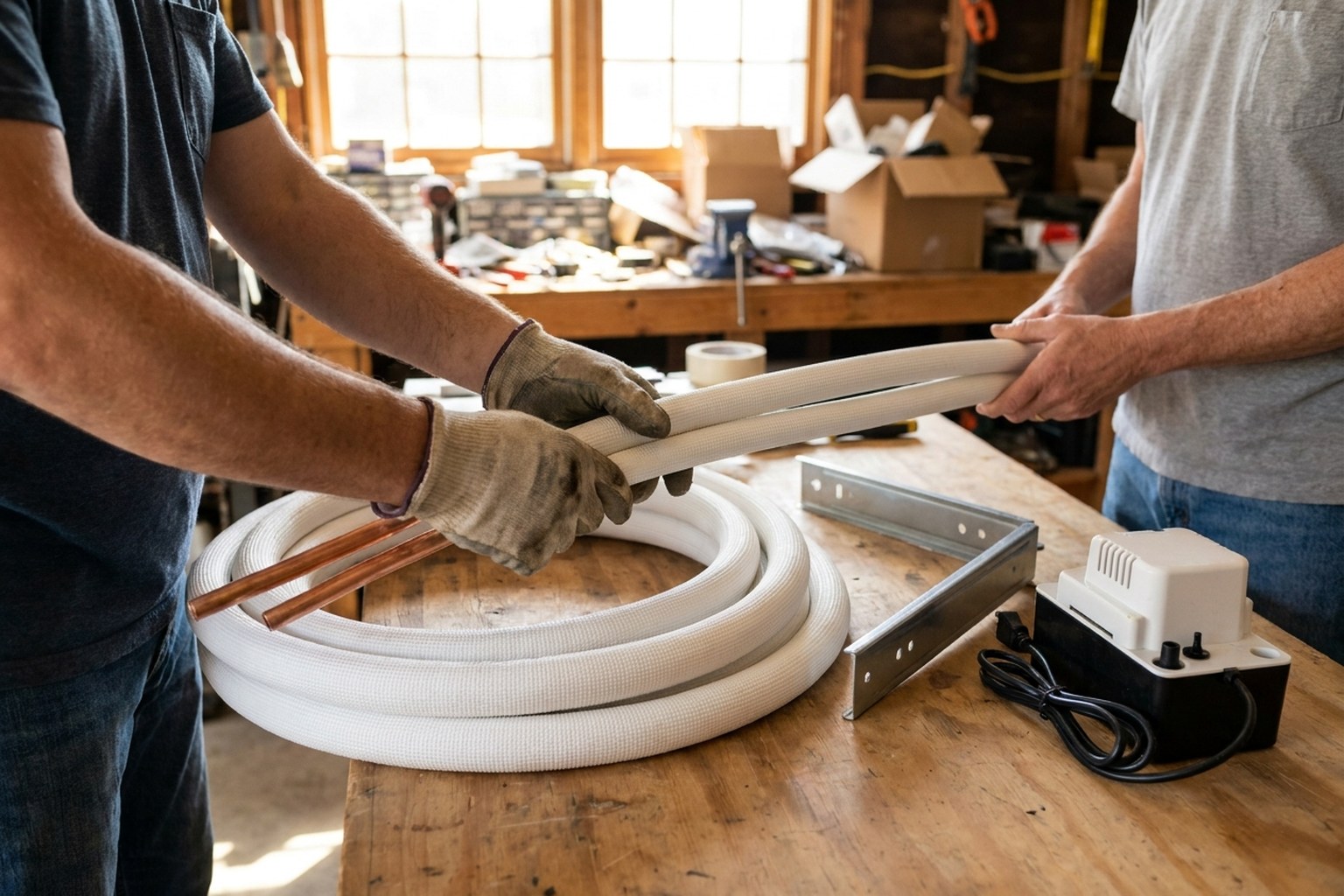 Ductless planning
Mini Split Line Sets and Accessories: Compatibility First
Mini split line sets and accessories: common line sizes (1/4 and 3/8 inch for 9,000 to 12,000 BTU), maximum lengths, pre-charged line limits, condensate pumps, covers and brackets, with the parts from our catalog.
Read the guide Ductless planning
Mini Split Cost to Install: What Drives the Price
Mini split cost to install: what each line item adds (heads, line runs, electrical, permits), why no public agency publishes a national price, the tax credit that ended in 2025, and how to compare quotes.
Read the guide Ductless planning
Can You Install a Mini Split Yourself? Rules and Limits
Can you install a mini split yourself? What EPA refrigerant rules allow, what pre-charged DIY kits change, why the wiring stays with a licensed electrician, and how warranties treat DIY installs.
Read the guideEdited
 Ductless planning
How to Choose a Mini Split for Your Home
How to choose a mini split: size it from a load calculation, pick 115V or 230V, read SEER2 and HSPF2 against the DOE and ENERGY STAR floors, and line up an installer first.
Read the guide Ductless planning
Mini Split Sizing: Loads Before BTU Labels
Mini split sizing: the ENERGY STAR square-footage chart, the sun, shade and occupant adjustments, BTU to tons, and why a Manual J load calculation beats any listing claim.
Read the guideHow we compare and rate the mini splits is explained on How we rate. The rest of the team: Our editors.