
Melissa Garvey, Senior editor
I'm the senior editor here, so a lot of my week goes into deciding what stays off the list. A system that's only there because it's cheap this week, a coverage promise the manual doesn't back up, a ranking nobody has opened since the prices moved: those are the things I go looking for.
My routine is unglamorous and I like it that way. Spec sheet on one side, installation manual on the other, owner reviews underneath. When a listing promises a square-footage figure, I want to see what the manufacturer's own documents say, and which voltage and circuit the system expects. When owners keep describing the same thing (a remote that forgets its settings, a drain line that drips in the first humid week, heat that fades on the coldest mornings), I write it down and it ends up in the ranking notes.
Sizing is the subject I care about most. A floor-area chart is a starting point; sun, ceiling height and insulation move the load more than people expect. I write the guides on choosing a system, sizing, zones and mini splits versus central air, and I edit most of the others.
We read, we compare, and we keep the lists current. When a price moves or a better system turns up, the ranking moves with it.
Areas of expertise
- Sizing: BTU labels vs room-by-room loads
- Single-zone vs multi-zone layouts
- Mini split vs central air
- Keeping the rankings current
How I work
- I start from the room (size, sun, ceiling height, how the space is used) and only then look at the BTU number.
- Every capacity, voltage and coverage claim is checked against the spec sheet and the installation manual of the exact system.
- I read owner reviews in bulk and count the complaints that repeat, not the loudest ones.
- When prices or models change, I go back through the rankings and update them.
Articles by Melissa Garvey
Written
 Ductless planning
How to Choose a Mini Split for Your Home
How to choose a mini split: size it from a load calculation, pick 115V or 230V, read SEER2 and HSPF2 against the DOE and ENERGY STAR floors, and line up an installer first.
Read the guide Ductless planning
Mini Split Sizing: Loads Before BTU Labels
Mini split sizing: the ENERGY STAR square-footage chart, the sun, shade and occupant adjustments, BTU to tons, and why a Manual J load calculation beats any listing claim.
Read the guide Ductless planning
Single-Zone vs Multi-Zone Mini Splits
Single-zone vs multi-zone mini splits: how many zones one outdoor unit can carry, when two single-zone systems beat one multi-zone, and which of our rated systems fits each layout.
Read the guide Ductless planning
Mini Split vs Central Air: Which Fits Your Home?
Mini split vs central air: duct losses of more than 30%, SEER2 ranges for ducted and ductless systems, zoning, installation and which homes suit which system, with the systems we rate.
Read the guideEdited
 Ductless planning
Mini Split SEER2 and HSPF2 Explained
SEER2 and HSPF2 explained: what the numbers measure, the DOE minimums (14.3 SEER2 and 7.5 HSPF2), ENERGY STAR thresholds, why SEER2 runs lower than old SEER, and what a good rating is.
Read the guide Ductless planning
Mini Split Cold-Weather Performance: What to Check
Do mini splits work in cold weather? What ENERGY STAR's cold-climate label requires at 5°F, how capacity drops in the cold, defrost and snow placement, and when you still need backup heat.
Read the guide Ductless planning
Mini Split Installation: Questions Before You Order
Mini split installation: how to choose a reliable installer, the questions to ask before you order, what a proper install includes (load calculation, pressure check, vacuum, commissioning) and what to get in writing.
Read the guide Ductless planning
Mini Split Electrical Requirements: Buyer Checks
Mini split electrical requirements: 115V vs 230V, why manufacturers want an individual circuit and a disconnect, how breaker sizing follows the nameplate, and what an 18,000 BTU unit needs.
Read the guide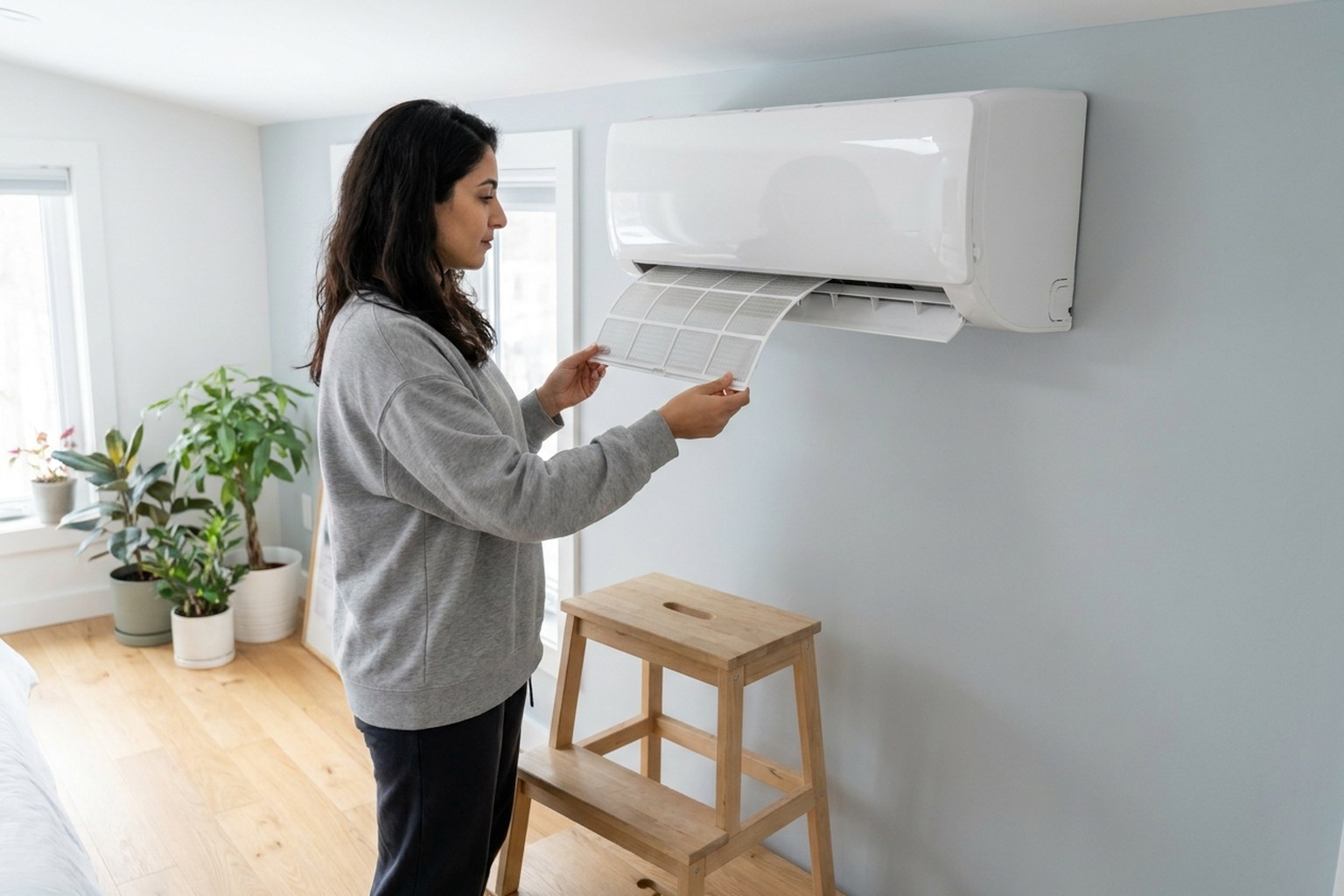 Ductless planning
Mini Split Maintenance: An Owner Planning Checklist
Mini split maintenance checklist: clean filters about every two weeks, keep the outdoor coil and drain clear, book an annual pre-season check-up, and know when the coil and blower need a professional clean.
Read the guide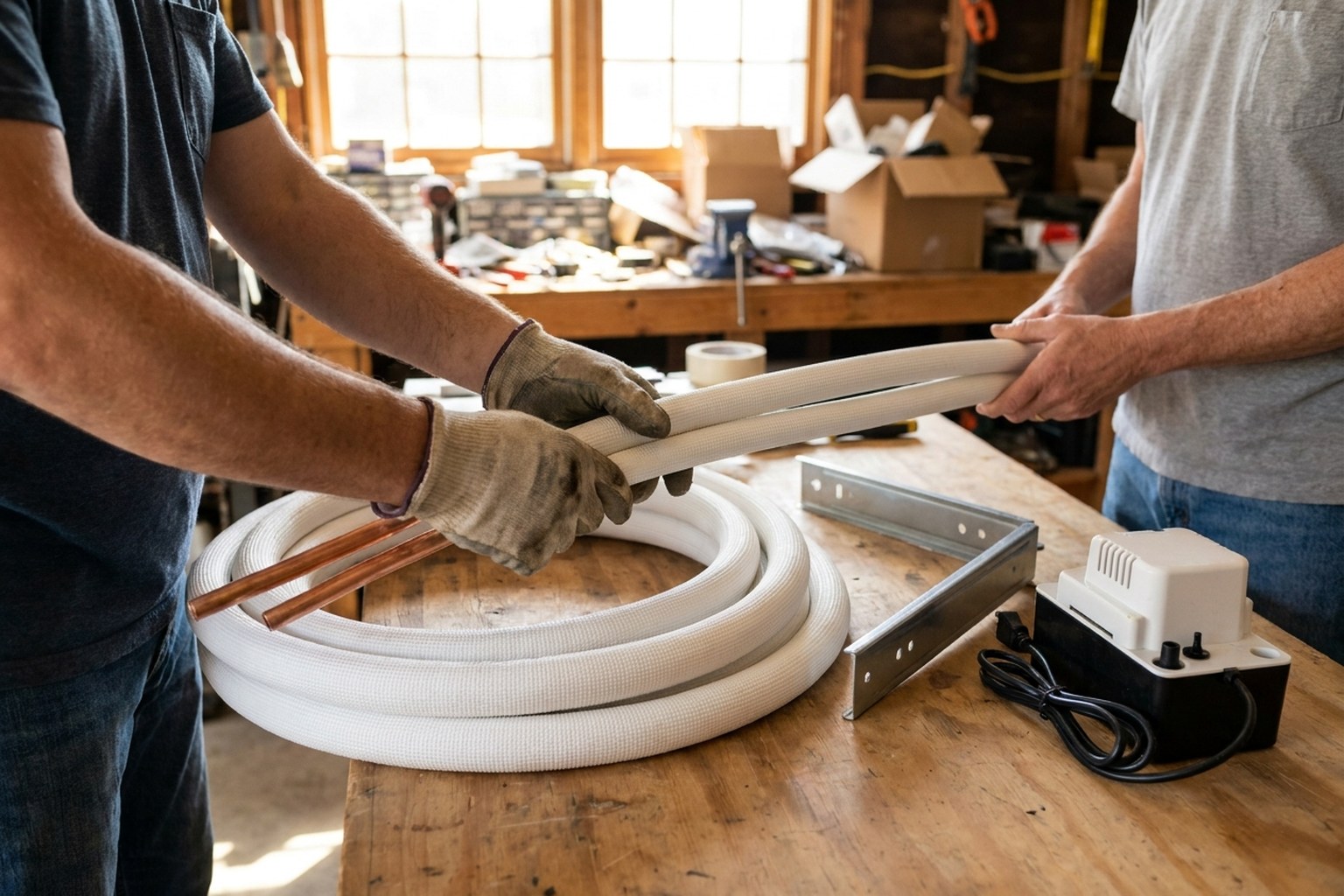 Ductless planning
Mini Split Line Sets and Accessories: Compatibility First
Mini split line sets and accessories: common line sizes (1/4 and 3/8 inch for 9,000 to 12,000 BTU), maximum lengths, pre-charged line limits, condensate pumps, covers and brackets, with the parts from our catalog.
Read the guide Ductless planning
Mini Split Placement and Noise: Planning Questions
Mini split placement and noise: indoor clearances and mounting height from the manuals, where the outdoor unit can and cannot go, how to read dB figures, and the quiet systems in our rankings.
Read the guide Ductless planning
Mini Split Cost to Install: What Drives the Price
Mini split cost to install: what each line item adds (heads, line runs, electrical, permits), why no public agency publishes a national price, the tax credit that ended in 2025, and how to compare quotes.
Read the guide Ductless planning
Can You Install a Mini Split Yourself? Rules and Limits
Can you install a mini split yourself? What EPA refrigerant rules allow, what pre-charged DIY kits change, why the wiring stays with a licensed electrician, and how warranties treat DIY installs.
Read the guide Ductless planning
Mini Split AC Repair: What to Check Before You Call a Tech
Mini split AC repair starts with owner checks: power, mode, filters, the drain and the outdoor unit. What each symptom means and when to call a tech.
Read the guideHow we compare and rate the mini splits is explained on How we rate. The rest of the team: Our editors.